





Toronto’s Indie Live Music listings for Blues/Folk/Roots/Country/East Coast/Jazz++
Don’t forget to BOOKMARK this page. Come back again and watch us grow!
All listings are free.
See Contact Us




As the 1970s music scene in Canada progressed from its CanCon legislated infancy to the unleashing of pre-manufactured major label acts created by management companies and A & R fashionistas, the actual music scenes in Vancouver, Montreal and Toronto (among many others) were developing both a strong DIY identity and potential farm teams for the '80s.
Toronto had become the de facto centre of the music universe. Labels needed a home base for their American satellite offices and the city was within driving distance of most American major centres on the east coast.
Initially, Yonge Street had been the hotbed of music throughout the '60s and '70s with clubs on every block from King Street at the bottom up to Davenport where the Masonic Temple's 'Rockpile' and the legendary Yorkville scene exploded to the west. Entrepreneurs like Sam Sniderman were smart enough to build retail outlets like Sam The Record Man on the Yonge Street strip to supply music enthusiasts the records they heard from bands in the clubs nearby -- either traditional HogTown R & B or straight up Rock music.
Meanwhile, Queen Street's music scene rose up from the rundown old storefronts and shops that had been forgotten in the shadow of legendary country bar The Horseshoe Tavern as college students and quick thinking hustlers convinced restaurant owners to allow a new breed of live entertainment to grace their doors. Hot on the heels of the punk wave in England, the mid-70s Toronto music scene was foregoing its R & B and Rock roots and was now alight with three chord noise merchants colliding with and often co-opting jazz, garage rock and the growing popularity of home spun reggae.
Though it was true to its name, Ralph Alfonso's late lamented Crash & Burn proved that there was interest in all forms of 'underground music' -- material getting played outside the confines of the commercial entertainment world. The cadre of bars on Queen Street West -- which also included venues along Spadina like The El Mocambo, Silver Dollar, and Cabana Room -- grew exponentially. With the exception of Larry's Hideaway on Carlton Street farther uptown, it was a musical microcosm far removed from the scene that co-existed on Yonge Street only a few city blocks away.
The music population base was also a strong hook for entertainment media outlets in the form of TV, radio, newspapers and magazines, and would become major players in the discovery of talent from Toronto's POP/ROCK music scene as it moved...Into The '80s.
The evolution of Canadian music in this era it is usually defined by its biggest successes, but when you truly dig into the forgotten basement store-rooms, book shelves and home studios of the musicians themselves, a gold mine of hidden gems can be unearthed wherever musicians had the will and the tiny budgets to document their muse.
To celebrate this musical era Sugar Moon Music brings you a the POP/ROCK edition of the "Into The 80's" compilation from a culmination of almost all previously unreleased material taken from 1/2", 1/4" and cassette tapes and lovingly restored & mastered true to their original recording standards by Peter J. Moore at the E-Room. We're sure this collectable collection will amuse and entertain you!
****************
As if upon safety-pinned wings, so too came the artists looking to be more than part of the scene -- they wanted to MAKE the scene. Having survived the first wave of newborn acts, punk gave way to New Wave and all the permutations that renegade radio station CFNY-FM could manage in the short time it had already been on the air.
With the Spirit of Radio's seal of approval, The Extras managed a modicum of notoriety - not only as BB "Nyet Nyet Soviet" Gabor's backing band before he signed with Anthem Records - but for a novelty song about a condom and the frustration of using same called "Circular Impressions". The Extras would release several records in the early '80s including "Can't Stand Still" featuring one of the first Canadian animated music videos. The song on this compilation, "State Of The Heart", recorded in Los Angeles, is a rare over-looked gem in the band's catalogue that was never released because it was overshadowed by a Rick Springfield Billboard Top-30 hit song by the same name at that time.
Another Toronto act that was unearthed by CFNY was Bullseye Records founders Moving Targetz who had spent the better part of the early '80s languishing at campus radio with their version of distopian jangly guitar rock. Nerve Magazine had likened the sound to "cats in a dryer". But a two year stint in the recording studio developing a contemporary British sounding synth-pop album called 'Bulletproof' landed them on 102.1's 'Independent Network' program hosted by Liz Janik. Included here is the song Janik made into an underground hit -- "Private Life".
Progressive rock had died at the end of the '70s like disco before it, and seeing the tide turn convinced Toronto band Whistleking to look elsewhere for inspiration. With a musical style change the band became The Kings, and this new rock and roll attitude paved the way for their successful career which began with a US major label deal with Elektra Records. This led to the massive international radio hit "This Beat Goes On/Switchin' to Glide", produced by Toronto native Bob "Pink Floyd" Ezrin. The song included here, "Is It Wrong", is from what guitarist Mister Zero calls "the album that shoulda been an album", meaning it was from a group of recordings that never saw the light of day. Some of the material from those sessions later morphed into what became their early '90s album 'Unstoppable'. "Is It Wrong" is the only Kings song that features a split vocal between members David Diamond and Sonny Keyes, and is also the only Kings song to be co-written by Diamond, Keyes and Zero.
Former American pop star Bob Segarini (ex-Wackers, Family Tree, Roxy) had moved from California to Montreal and then to Toronto in search of a new career path. With stints at CHUM-FM, CITY-TV and Q107-FM in Toronto, Bob also had the luxury of a continued solo career first with A & M Records and then Wolfgang Spegg's fledging Queen Street friendly label Bomb Records. Segarini's first full solo outting, 'Gotta Have Pop', has become iconic and led critics to liken him to 'Canada's answer to Nick Lowe'. Seeing the British comparison as an opportunity to invade another territory, the album was released in the UK but not without some changes. Bob's "Living In The Movies" contained a reference to the word "fanny" which is British slang for a female body part. And so, the song was remixed with a new, inoffensive line substituted and it is this version we present here.
The Toronto underground music community was also a very small, close knit family. Segarini had worked on Goddo's 'Best Seat In The House' LP with engineers Doug McClement and Blair Packham in 1980. Blair was also a burgeoning songwriter and had his own plans for pop stardom with his band The Jitters. Nearly five years of the nightclub grind and after a line-up change that saw the departure of drummer David Quinton (Mods, Stiv Bators Band) to a law career, The Jitters received placement on Q107's famed 'Homegrown' new talent compilation album in 1986. It was the contest song, "Last Of The Red Hot Fools", that attracted the attention of Capitol Records Canada and a record deal. It is this third recording of the fan favourite of the song that's included here.
Meanwhile, Halifax, Nova Scotia act Basic English decided that if they were to make it big they needed to be where the action was and headed to Toronto. Not long after landing in the Big Smoke they added a new bassist and, like The Jitters, entered the annual Q107 Homegrown competition. The band won the 1987 Homegrown contest and also managed a CFNY-FM CASBY Award for 'Best Non-Recording Act'. The Q107 contest brought them $12,000 in equipment, $5000 cash, a video shoot, and a single courtesy of Metalworks studio. They signed with Risque Disque Records and recorded their debut album "Sweet Panic!" with producer Terry Brown (Rush, Max Webster, Blue Rodeo). "Things Are Done" is a previously unreleased track from these sessions.
At the opposite end of the musical spectrum, Richard Underhill's Shuffle Demons were the epitome of cool in an era where credentials were often bought and not earned. The Demons came about their hip status honestly -- working tireless hours on stages trying to exist in an industry where record deals were few and far between...especially for acts that defied the mainstream. A modern band playing beatnik jazz with saxophones as their driving force was a hard sell. Well, everywhere except Queen Street where such sounds and sights were the norm. Self-produced records about the "Spadina Bus" and a tre-cool rendition of the former "Hockey Night In Canada" theme song and tracks like "NO Free Trade" (featured here as an unreleased rare live track with Micah Barnes Mendelson Joe, Kurt Swinghammer, Bratty and more adding vocals) firmly established The Shuffle Demons as innovators, all of the members continuing as some of Canada's best players.
Micah Barnes also tread a similarly non-commercial road with The Micah Barnes Trio (featuring his brother Daniel) who had established themselves by playing to packed houses in the top Jazz and Cabaret rooms of Toronto such as The Bamboo, The Rivoli and The Horseshoe. They eventually became The Micah Barnes Band sharing stages nationally with Jane Siberry, Carole Pope and The Parachute Club as well as joining established jazz acts like Holly Cole and Molly Johnson in concert. Much Music, CBC and the national press helped create a huge buzz about the band, resulting in opening gigs for international acts like Nic Kershaw at Massey Hall and Natalie Cole at The O'Keefe Centre. Eventually Micah would join world-renowned a cappella act The Nylons. But before all that came "Speak My Language" featured here, produced by songwriters Eddie Schwarz (“Hit Me With Your Best Shot”) and Dave Tyson (“Black Velvet”).
Toronto was also ripe with original reggae acts that had learned their trade from transplanted islanders only a generation before like the 20th Century Rebels and Messenjah. Sunforce was one of a series of collectives/bands organized by Nigel Murray in Kensington Market who were on the periphery of this movement and songs like this live version of "Stop Them!" focused on political messages. Many of the members of Sun Force and other incarnations are still active musicians, many of them, such as Meiron Kelly and Howard Moore, can be seen around Toronto in the jazz scene.
In other parts of the scene there was still the tried and true four-man guitar power pop movement buried amongst the multi-genre musical transitions in Toronto. The Grottybeats were just such an act making hummable, three-minute pop songs that were all the rage stateside. They had started off as a Beatles tribute band and quickly developed their own sound becoming one of Toronto's most popular party bands playing typical Toronto venues like The El Mocambo and The Gasworks and clubs outside of Toronto proper including The Knob Hill, BJ Cuddles, Subway, The Nag's Head, The Black Hawk Motor Inn, etc. They did manage to release one 7" single called "Love Games" before taking a bow. Included here is a rare studio outtake called "Moonlight Beach".
To that extent, British Invasion was still a much in-demand stylistic preference amongst the old guard trying to make sense out of all the new music coming out of the woodwork. Like The Grottybeats, The Blushing Brides had started their career as a tribute act -- their specialty being The Rolling Stones. Vocalist Maurice Raymond was Mick Jagger to guitarist Paul Martin's Keith Richards. But they were also adept at writing balls-to-the-wall pub rock in the Stones style and managed to secure a record deal with RCA Records in Canada. "Poison Touch" is an overlooked gem from that time period that shows The Brides' mastery of songwriting and style. They have continued playing together to this day.
The new music scene in Toronto in the '80s also allowed for the continued support and growth of past veterans. Early '70s folk icon Ronney Abramson, best known for the hits "Your Love Gets Me Around", "S.T.O. Please" and "Light Up Your Love" was able to successfully make the transition into the modern era as a songwriter and recording artist long after her Yorkville coffee house days and brush with early fame on both Capitol and True North Records. Having never followed trends, her world-friendly musical vision allowed her to seamlessly incorporate songs like this collection's previously unreleased "I'm Waiting" that was engineered by pre-fame producer Daniel Lanois at Grant Avenue Studio in Hamilton.
*******************
We hope you've enjoyed what's been uncovered on Volume 1 “Into The 80s: GREAT Toronto Bands” so that we might bring you more of this great music from our not-so-distant past. Stay tuned for Volume 2, “More Into the 80s: Toronto Punk/New Wave” and Volume 3, “Absolutely Into the 80s: Unique Toronto Voices”.
Jaime Vernon,
Authour of The Canadian Music Encyclopedia
www.bullseyesongs.com/encyclopedia.html
May 2010
***************************


INFO & LISTINGS BY: VENUE BLUES (TBS) 905 MISS. AREA
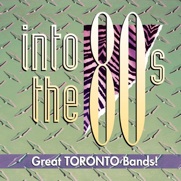
“Into the 80s: Great TORONTO Bands!”
Liner notes
by Jaime Vernon
Authour of The Canadian Music Encyclopedia
www.bullseyesongs.com/encyclopedia.html
May 2010